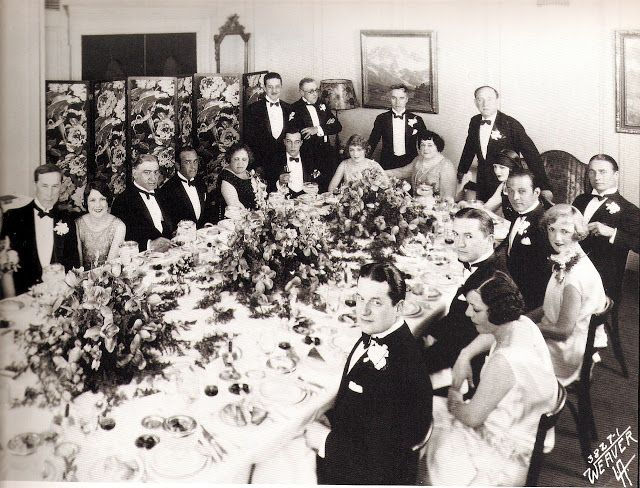
A Genuine 1920s Dinner
With recipes from Julie Elias' cookbook

Dear Ladies and Gentlemen,
I hope you had a fantastic start to the new year and are enjoying good health!
Those of you who have been reading Peacock & Pearls for some time may remember my article Enjoyable Gatherings about Max Liebermann's legendary dinner parties at Berlin's Wannsee, which were often attended by the art critic couple Elias (if not, you can read it here). While researching the article, I wondered what it would have been like to have been a guest there, listening to the conversations of famous artists and writers at the table while enjoying delicious food and wine. A very appealing idea! But even though Max Liebermann himself can no longer give dinner parties, fortunately we still have the original recipes of the time from Liebermann's good friend Julie Elias, which can be found in the highly recommended book Meisterwerke für uns'ren Gaumen' – Max Liebermanns Geselligkeit und feine Küche (Masterpieces for our palates – Max Liebermann's conviviality and fine cuisine) by Ursula Hudson-Wiedermann. So I thought to myself, why not try cooking a menu from it myself? After making my selection, I went shopping, prepared the food and, of course, set the table. Curious about the result? Then read on!

Starter: Zimmermann salad
A salad as a starter is always a good option, and above all, it is light enough if more substantial courses are planned afterwards. For that purpose, I have chosen Julie Elias' Zimmermann salad. The recipe is very short and offers plenty of scope for creativity:
Chicory, apples or bananas are cut into pieces, mixed with crab and capers, and dressed with vinegar and oil, just like any other salad.*

Instead of chicory, I used frisée lettuce and added the chopped apples. Prepare a vinaigrette with olive oil, vinegar, pepper, salt, a dash of lemon juice, a little mustard and honey. Stir in the capers. Garnish with small North Sea crabs when serving. A delicious starter that looks particularly impressive when served in a champagne glass.
Main course: Entrecôte with sports butter

The light starter is now followed by a more substantial main course, which I chose mainly because of the interesting-sounding sports butter:
A medium-sized entrecôte is cooked (medium) rare, preferably on the grill. When serving, place a spoonful of cold sports butter in the middle of the steak and a soaked anchovy on either side of the butter.
Sports butter: a quarter pound of unsalted butter, a spoonful of mixed pickles, half a spoonful of capers, five hard egg yolks, five cornichons, chopped parsley, onion, tarragon, a spoonful of Worcestershire sauce. Pound everything together in a mortar, pass through a fine sieve, mix well and chill in a porcelain bowl.
If you want the meat to be as tender and juicy as possible, you can place it in the oven at 50 degrees for about an hour before cooking, then fry it on a hot grill or in a pan, and then leave it to rest briefly. As I'm not a big fan of anchovies, I left them out. For the sports butter, I used slightly less egg yolk (three instead of five) and dried tarragon instead of fresh, as I couldn't get hold of the latter. All in all, a very delicious dish that scores highly, especially with the very well-seasoned butter!
Side dishes: Vichy carrots and potato gratin (Mousse Parmentier)

As accompaniments to the entrecôte, I found classic Vichy carrots and potato gratin, also known as Mousse Parmentier, to be very fitting. Julie Elias recommends the following method of preparation for the carrots:
Clean the carrots and cut them into thin horizontal slices. Place them in a saucepan with a little water, butter, sugar and Vichy salt. Cook the carrots over a low heat for just over two hours (the sauce should be brown) and stir them from time to time during cooking; they tend to stick slightly. When serving, add a knob of butter and chopped parsley. ***
Except for the Vichy salt, which I couldn't get hold of at short notice, this recipe was easy to follow. The slow cooking method in butter and sugar gives the carrots a delicate caramel flavour, and the chopped parsley adds a touch of freshness, which perfectly rounds off the taste of the vegetables.
The potato gratin can be made using this recipe:
Boiled potatoes are mashed through a sieve, mixed with egg yolks, butter and a little cream, and seasoned with salt, pepper and some nutmeg. The egg whites are folded in, the mixture is sprinkled with cheese, topped with butter and baked in a baking dish.****
As with mashed potatoes, I used floury potatoes. In my opinion, cheeses such as Gruyère or mature Cheddar are particularly suitable for gratin dishes. If you sprinkle some freshly grated Parmesan and a few flakes of butter over the gratin at the end, you will also get a lovely crust.
Dessert: Coffee parfait (based on Martha Liebermann's recipe)

For a sweet finish, I chose the coffee parfait after Max Liebermann's wife Martha:
Three hundred grams of butter are stirred into cream; then two hundred and fifty grams of sugar are added, followed gradually by six egg yolks. Four lots of coffee [approx. sixty-five grams] are brewed into a small cup of extract, which is added drop by drop to the mixture, stirring constantly. The mould is coated with butter and lined with biscuits around the sides and bottom. Then alternate layers of cream and crumbled biscuits are added until the mould is full. The parfait must be made early in the morning and removed from the mould one hour before serving. Finally, the parfait is covered with chocolate icing and garnished with whipped cream.*****
For simplicity's sake and to make it less heavy, I used only whipped cream to start. Store-bought sponge fingers work very well for the biscuits, but the more ambitious among you can of course bake your own. As the parfait is already very rich, I decided not to add the chocolate sauce and extra whipped cream at the end, but everyone can do as they please. To add a fruity component, I added a fruit sauce made from mango and passion fruit to the dish and sprinkled it with a little cocoa powder. A real treat!
If you now feel like recreating a 1920s-style dinner using authentic recipes from the period, you're sure to find what you're looking for in Meisterwerke für uns'ren Gaumen' – Max Liebermann's Geselligkeit und feine Küche (Masterpieces for our palates – Max Liebermann's conviviality and fine cuisine) by Ursula Hudson-Wiedermann. I wish you lots of fun and every success!
Yours sincerely,
Marleen Tigersee
Meisterwerke für uns'ren Gaumen' – Max Liebermann's Geselligkeit und feine Küche. vacat verlag, First edition, Potsdam 2009
*p. 45
**p. 61
***p. 71
****p. 75
*****p. 87

Comments